How To Stop Shadow AI With Self-Service Governance (And Why AI Platforms Themselves Aren’t Enough)
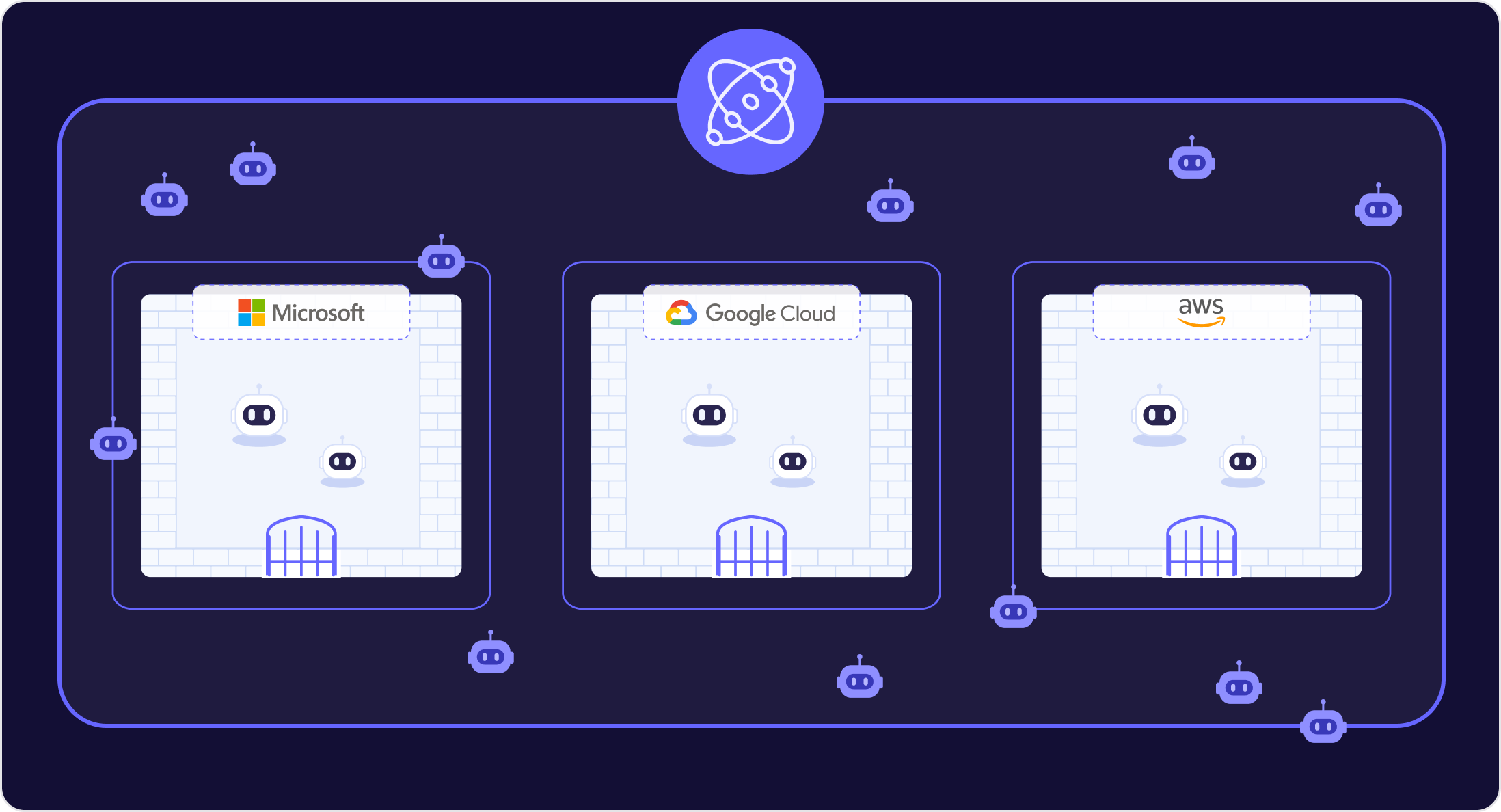

In a 2026 survey of 1,900 IT leaders, 96% of enterprises said they already have AI agents in production, but only 12% said they can actually govern them. Some organizations turn to the AI platforms themselves, but the tools they provide only cover their own platforms—not your entire AI portfolio. The less visibility you have, and the longer you lack it, the more you’re exposed to outcomes you can’t manage or measure, whether they’re risks or benefits for your company.
This is the gap AlignAI fills. It’s the effective governance layer that captures what each AI initiative is; what it touches; and what it needs from risk, data, and technical teams before it ships, not after a compliance violation.
What Is Shadow AI?
Shadow AI is any AI agent, model, or initiative running inside your organization without going through governance. It's the AI equivalent of shadow IT, but with higher stakes because these systems make decisions, touch sensitive data, and act on their own.
It’s usually not done maliciously. Employees might be unknowingly sidestepping governance because AI platforms make it easy to, or the governance process itself might be invisible or too slow-moving.
Why Self-Serve Governance (Not Just “More” Governance) Improves Your AI Program Overall
In AlignAI's survey of financial services and insurance AI leaders, leaders consistently reported having "full visibility" into their AI initiatives, while the operators underneath them described the opposite: no single view, no integration, no end-to-end coordination.
More effective (versus tighter or looser) self-service governance is what actually enables safer and better AI deployment. You want a governance process that’s visible to everyone and frictionless enough that registering an initiative is easier than side-stepping it, but strong enough to enforce boundaries.
By preventing shadow AI (rather than hunting it down after the fact), you can catch initiatives before they ship, instead of a painful audit six months later.
Platforms Are Just Beginning To Focus On Their Own Governance—They Can’t Handle Your Full Portfolio
Most AI platforms offered little governance mechanisms until very recently:
- Microsoft offers the Power Platform Admin Center, Purview for data-security signals, and the open-source Copilot Studio Kit for agent inventory (more detailed walkthrough is below.)
- Google's Gemini Enterprise Agent Platform shipped Agent Registry, an Agent Gateway for policy enforcement, semantic governance policies, and audit logs as native platform features.
- AWS's Bedrock AgentCore added a governed Agent Registry (in preview) plus AgentCore Policy, which enforces hard limits on agent actions through a gateway, separate from the agent's own reasoning.
But even with these updates, platforms only govern the agents built on that platform. Microsoft sees Copilot Studio. AWS sees Bedrock. They don’t see agents built in other tools, coded by employees, or tools you haven’t even deployed org-wide yet.
Your business leaders, risk team, and executives have no single place to answer: what AI are we running, where, and is it safe? No native platform tool gives you a cross-platform inventory, pre-deployment risk classification tied to business context, or a data-lineage view that connects an agent to the sensitivity of the data it can reach. That's the layer AlignAI is purpose-built to provide.
Where AlignAI Fills The Gap And Why It's Urgent
AlignAI sits on top of your AI platforms as a bi-directional readiness and governance layer, providing:
- Self-service governance that people use. Teams register and route their own solutions through a guided intake that flows through automated checks and approval workflows. The right way is easier than a workaround.
- Cross-platform inventory. One registry across Copilot Studio, Gemini, Bedrock, vendor tools, custom builds, or wherever it was made.
- Risk classification with business context. Platform metadata tells you how an agent is configured. AlignAI adds the layer that says whether it matters: business unit, data sensitivity, decision authority, regulatory exposure. Agents get risk-tiered at registration, before production.
- The full policy lifecycle, not just detection. Intake, review assignment, approval, and re-review when scope changes or data sources are added, not after something’s wrong.
- Data catalog integration. AlignAI matches an agent's data sources against your catalog (Purview, Alation, Collibra) to produce a real data-lineage view for AI.
The EU AI Act, SR-117, and a growing list of sector regulations now expect documented AI risk management. Internal audit and legal teams have started asking which agents touch regulated data, and “we’re not sure” isn’t an acceptable answer.
Example: What Microsoft AI Platform Governance Gives You (and What It Doesn't)
Microsoft is the clearest example because many enterprises use it and assume Copilot Studio governance is handled out of the box. Here’s how it actually works:
Power Platform Admin Center
Shows published agents in the environments an admin can see. You get basic counts and environment-level controls. You don't get risk classification, usage detail, or any view of agents still in development. The admin is blind to environments their account can't reach.
Microsoft Purview
Captures Copilot for M365 prompts and responses for compliance. Its “Risky Agents" policy can flag anomalous behavior, but only after deployment. It requires E5 or a Purview add-on. It’s scoped to Microsoft 365 Copilot interactions, not Copilot Studio or Azure AI Foundry agents.
The Copilot Studio Kit
A free open-source solution that doesn’t offer Microsoft support. You have to stand it up yourself with a dedicated service admin account across all environments. It gives you the most complete Copilot Studio inventory available (but only covers Copilot Studio). You can see: per-agent creator, environment, capability flags, knowledge sources. There’s no risk scoring or approval workflow.
Even if you layer all of these on top of one another, you are still left with no mechanisms for risk classification, approval workflows, cross-platform views, and no link between agents and data sensitivity. This is the layer AlignAI provides.
Signs It's Time to Close the Gap
The question isn't if you have shadow AI, it's how much, and how long until its impacts surface. If you say yes to any of the following, the gap is already open:
- You can't produce a current inventory of the AI agents being built across your organization.
- No single person or process approves a new agent before it reaches production.
- You don't have a policy that defines what's allowed, what needs review, and what's prohibited for AI.
- Your teams build in more than one place (e.g., Copilot Studio and Gemini and vendor tools and custom code.)
- You can't say which agents have access to sensitive or regulated data.
- Audit, legal, or a regulator has already started asking how you govern AI.
Get The Self-Service Governance Layer You Need
Ungoverned AI agents are problematic at best and a regulatory or security incident at worst. In between is a quieter but just as critical cost of an AI portfolio you can’t measure, optimize, or understand. AI platforms are focused on shipping tools for their own environments, and none of them will give you the layer that spans your whole portfolio.
With AlignAI, you can capture the context of every AI initiative up front, translate it into what every team needs to act, and clear governance in days to weeks instead of quarters.
Frequently Asked Questions
What is shadow AI?
Shadow AI is any AI agent, model, or initiative running inside an organization without going through formal governance. It's the AI version of shadow IT, but higher-stakes, because these systems make decisions, access sensitive data, and act autonomously. It usually arises when governance is slow or unclear enough that teams find it easier to route around it.
Does Microsoft Copilot include AI governance?
Not in the way most people assume. Microsoft's tools (Power Platform Admin Center, Purview, the open-source Copilot Studio Kit) can give you an inventory and some compliance signals for Copilot Studio agents, but they offer no pre-deployment risk classification, no approval workflow, no cross-platform view, and no link between an agent and the sensitivity of the data it touches. Even a fully-equipped Microsoft customer still lacks a true governance layer.
Do Google and AWS include AI governance?
They've made progress with Google's Gemini Enterprise Agent Platform and AWS’s Bedrock AgentCore. They ship agent registries and policy enforcement, but each governs only the agents built on its own platform. Most enterprises run agents across several platforms plus vendor and custom tools, so per-platform governance leaves leadership without a single, portfolio-wide view of what's running and whether it's safe.
How is AlignAI different from a platform's built-in governance?
AlignAI is system-agnostic. Instead of governing one platform, it sits above all of them connecting bi-directionally. AlignAI captures every AI initiative in a single inventory, classifying risk with business context before production, managing the full approval lifecycle, and connecting agents to your data catalog for a real data-lineage view. It feeds downstream tools like ServiceNow, Archer, and Jira rather than competing with them.
Will adding AI governance slow our teams down?
The opposite should happen when done right. Heavy-handed governance is what pushes people to build shadow AI. AlignAI's self-service intake is designed to make the governed path faster than the workaround, so initiatives clear review in weeks instead of quarters.